Introduction

Advanced Yogasanas

Ten postures for practitioners with a strong foundation in flexibility, strength, balance, and breath control. These asanas demand discipline and body awareness, and should be practiced under proper guidance.

10Postures in this chapter
AdvancedLevel of practice
GuidedRecommended setting
Steady gaze
Steady breath
Why practice these

Where strength turns into stillness.

These postures help develop strength, control, and deep awareness, deepening the connection between body, mind, and breath — ultimately guiding the practitioner toward inner balance, self-realization, and higher levels of concentration and meditation.

01
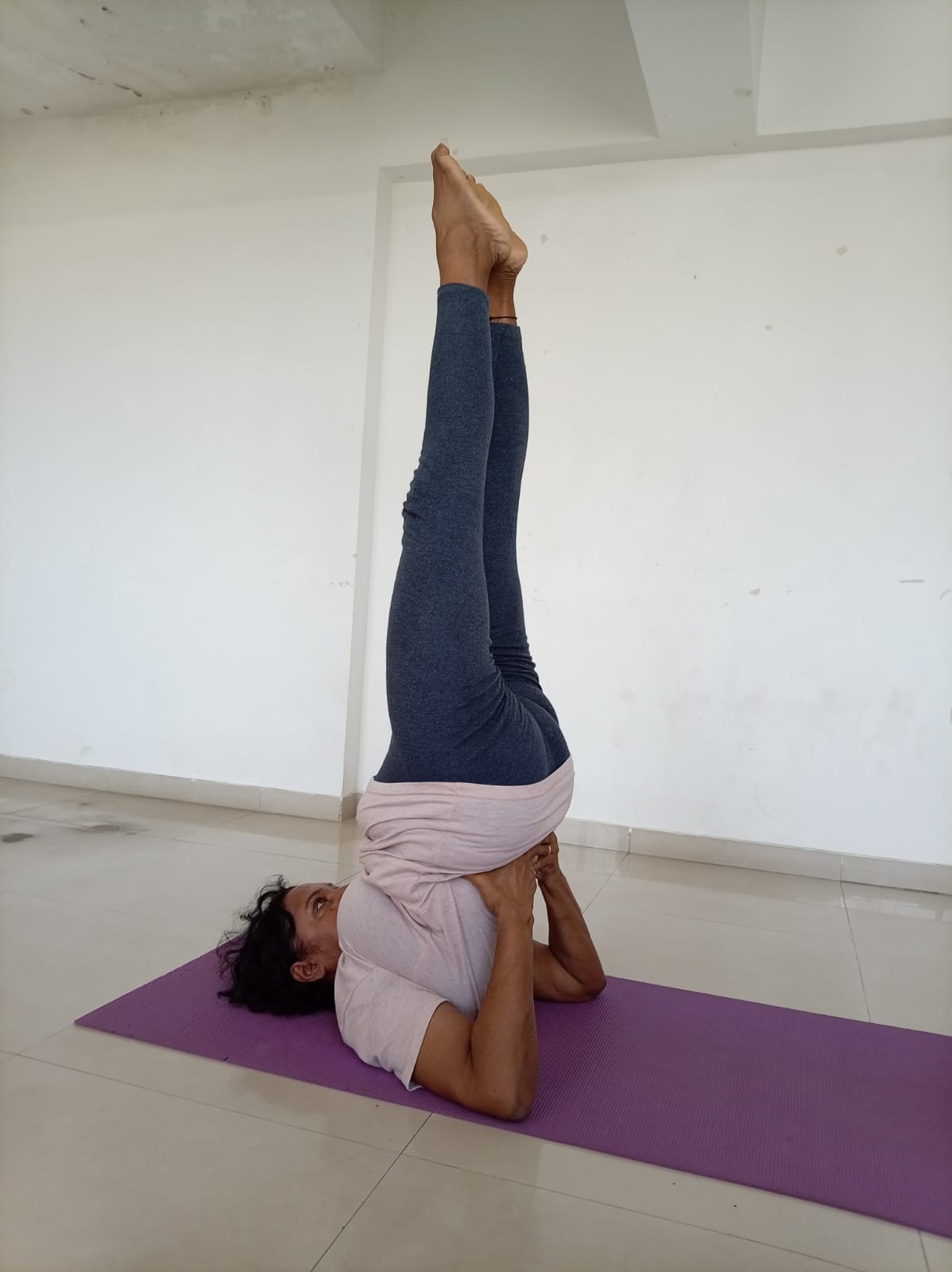
Practitioner in Sarvangasana, the shoulder stand, with legs extended toward the ceiling
Photo: Wikimedia Commons, CC BY-SA
Pose 01 of 10

Shoulder Stand

Sarvangasana
  1. Lie on your back and gently lift your legs off the ground without bending the knees
  2. With a slight push, lift your hips upward and bring your legs toward the ceiling
  3. Support your back with both hands, keeping your upper arms firmly on the ground
  4. Keep the body straight and remain in the posture for about one minute
Circulation Thyroid support Shoulder & neck strength Calms the mind Balance
02
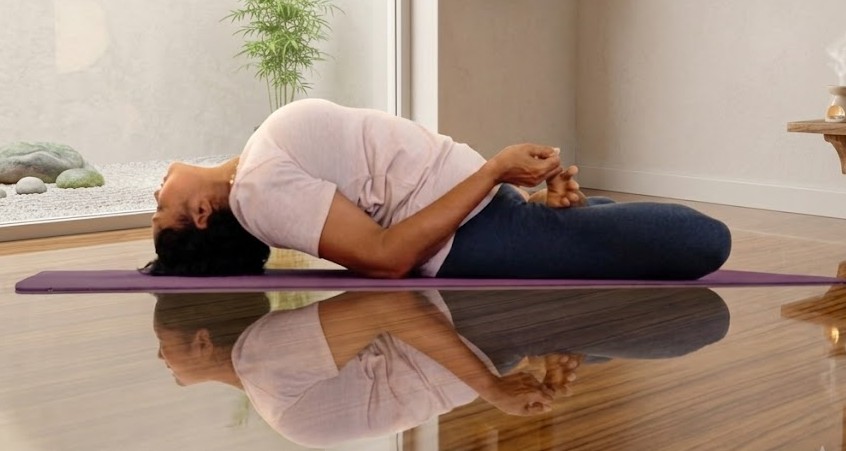
Practitioner in Matsyasana, the fish pose, arching the chest upward with the crown of the head toward the floor
Photo: Wikimedia Commons, CC BY-SA
Pose 02 of 10

Fish Pose

Matsyasana
  1. Lie on your back with legs extended (or sit in Padmasana / Vajrasana first)
  2. Place hands under the hips, palms facing down
  3. Press elbows into the ground and lift the chest upward
  4. Gently tilt the head back, allowing the crown to touch the floor
  5. Keep your eyes closed and take deep, steady breaths
  6. Hold the posture for about 30 seconds
Posture Chest & lung opener Neck & shoulder relief Thyroid support
03
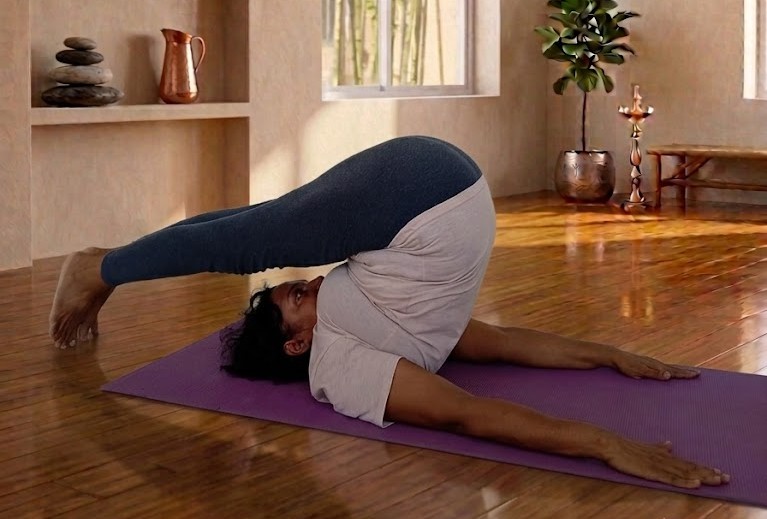
Practitioner in Halasana, the plough pose, with legs extended overhead behind the shoulders
Photo: Halasana
Pose 03 of 10

Plough Pose

Halasana
  1. Lie on your back with arms beside your body
  2. Lift legs over your head slowly
  3. Try to touch toes to the floor behind your head
  4. Keep the legs straight, support the back if needed, and hold for about one minute
  5. Release gently by bringing the legs to a 90-degree angle
  6. Slowly lower the legs without bending the knees or straining the upper body
  7. Relax in the starting position and breathe normally
Spine & shoulder flexibility Digestion Thyroid stimulation Calms the nervous system
04
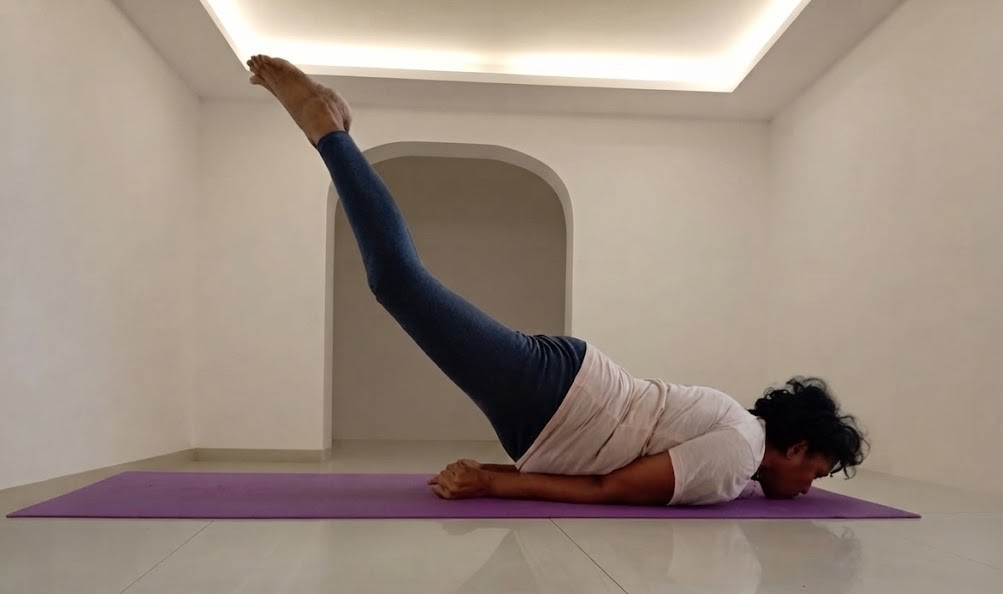
Practitioner lying prone in Shalabhasana, lifting the legs while the chin rests on the floor
Photo: Shalabasana
Pose 04 of 10

Locust Pose

Shalabhasana
  1. Lie on your stomach with arms beside your body
  2. Keep chin or forehead on the floor
  3. Inhale and lift legs upward without bending knees
  4. Hold for a few seconds, gradually increasing the time, then relax
  5. Start the practice with one leg at a time
Lower back & glute strength Posture Digestion Core endurance
05
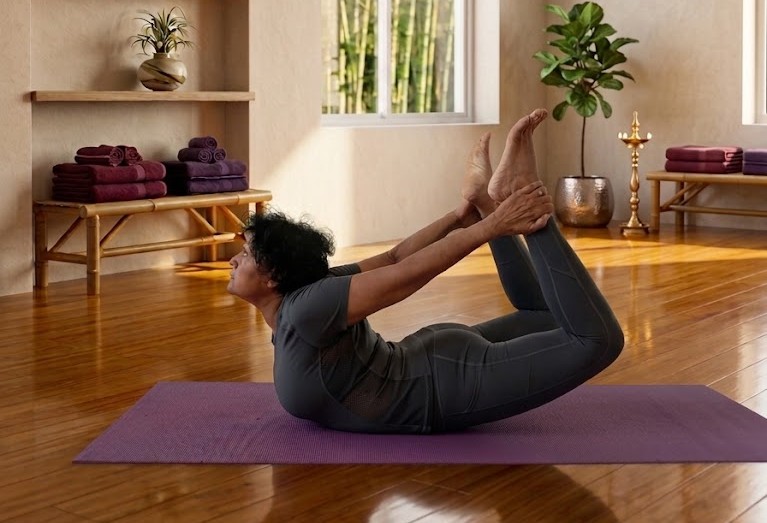
Practitioner in Dhanurasana, the bow pose, balancing on the abdomen while holding both ankles
Photo: Wikimedia Commons, CC BY-SA
Pose 05 of 10

Bow Pose

Dhanurasana
  1. Lie on your stomach
  2. Bend knees and hold ankles with hands
  3. Inhale and lift chest and legs upward
  4. Balance on your abdomen and hold for up to 30 seconds
Back & abdominal strength Spinal flexibility Digestion Breathing capacity
06
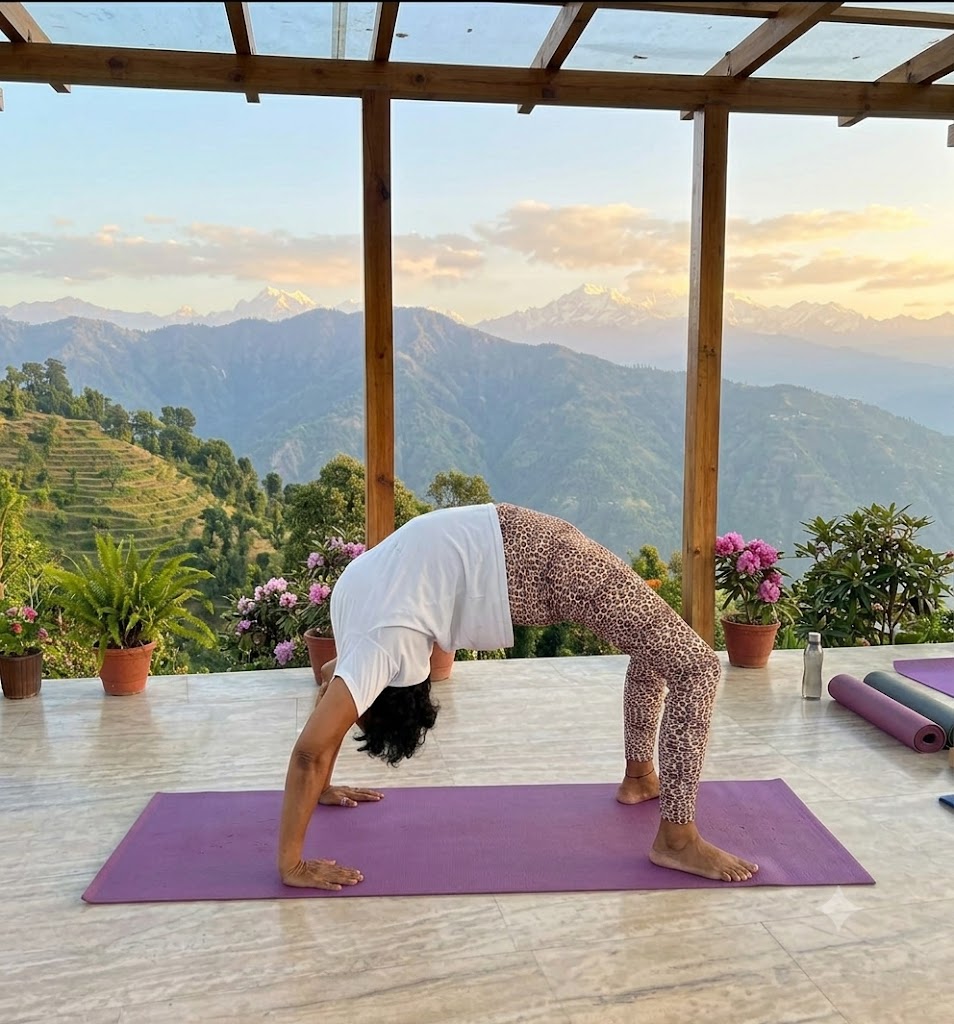
Practitioner in Chakrasana, the wheel pose, arching the body upward supported on hands and feet
Photo: Wikimedia Commons, CC BY
Pose 06 of 10

Wheel Pose

Chakrasana
  1. Lie on your back and bend your knees, bringing feet close to the hips
  2. Place your palms beside your ears, fingers pointing toward the shoulders
  3. Press hands and feet firmly into the ground and slowly lift your body into an arch
  4. Straighten the arms and legs as much as comfortable, holding while breathing normally
Full-body strength Chest & back flexibility Energizing Endocrine stimulation
07
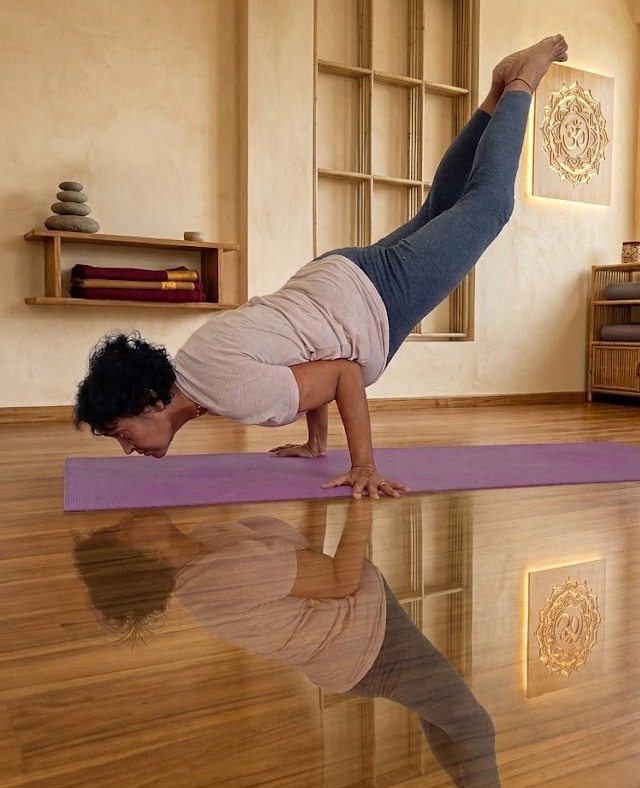
Practitioner balancing parallel to the floor on the hands in Mayurasana, the peacock pose
Photo: Mayurasana
Pose 07 of 10

Peacock Pose

Mayurasana
  1. Kneel and place your palms firmly on the ground, fingers pointing back toward your body
  2. Bring your elbows close together and press them gently into your abdomen
  3. Lean forward and slowly lift your legs off the ground, balancing parallel to the floor
  4. Keep the body straight and hold while breathing normally
  5. Initially try raising with one leg at a time
Arm & wrist strength Digestion Core & balance Focus
08
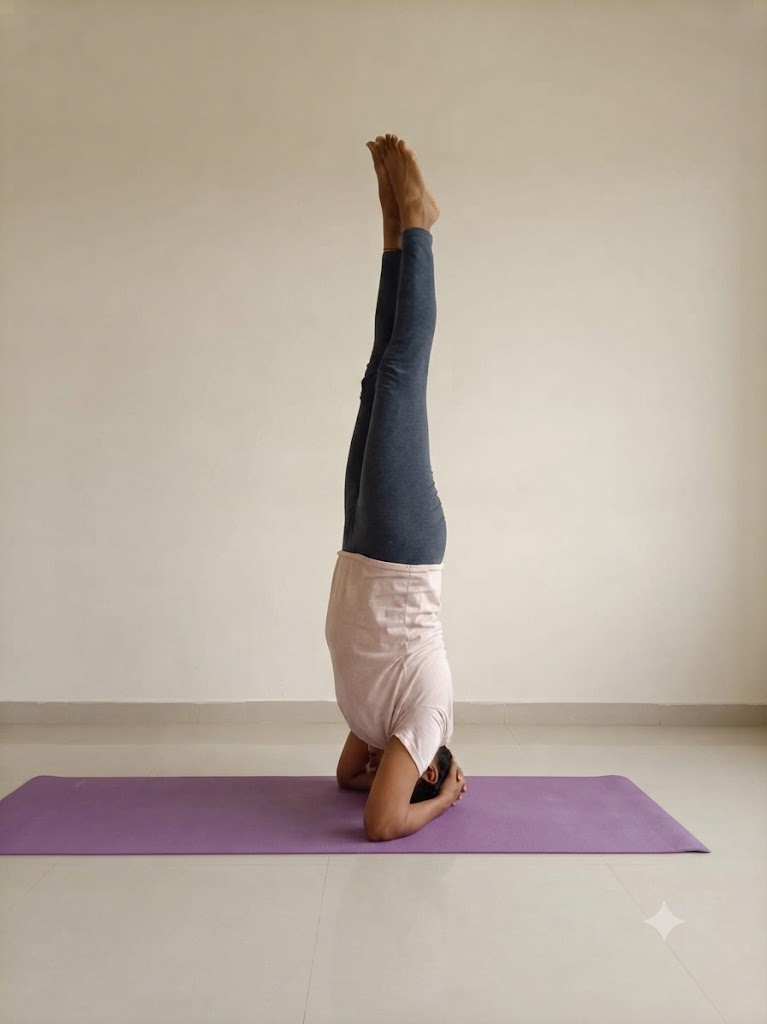
Practitioner in Shirsasana, the headstand, balancing vertically on the forearms and crown of the head
Photo: Shirsasana
Pose 08 of 10

Head Stand

Shirsasana
  1. Kneel on the floor and place forearms on the ground
  2. Interlock fingers and place the crown of the head gently between the hands
  3. Slowly lift the legs upward, using core strength for balance
  4. Straighten the body vertically and hold the posture, breathing steadily
Circulation to the brain Concentration & memory Shoulder & core strength Calms the mind
09
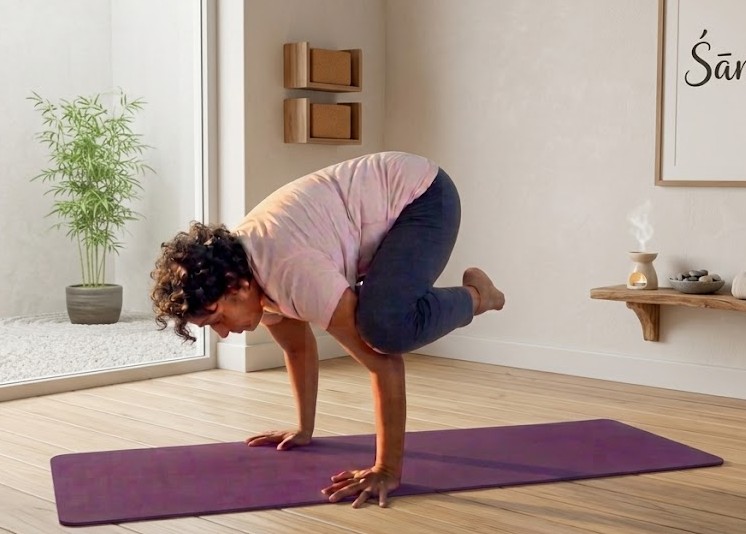
Practitioner balancing on the hands in Bakasana, the crow pose, with knees resting on the upper arms
Photo: Wikimedia Commons, CC BY-SA
Pose 09 of 10

Crow Pose

Bakasana
  1. Squat down and place your feet close together
  2. Place your palms firmly on the ground, shoulder-width apart
  3. Bend your elbows slightly and place your knees on the upper arms, near the armpits
  4. Shift your body weight forward onto your hands
  5. Slowly lift your feet off the ground and balance on the arms
  6. Keep the gaze forward and hold while breathing steadily
Arm & wrist strength Balance & coordination Core strength Confidence
10
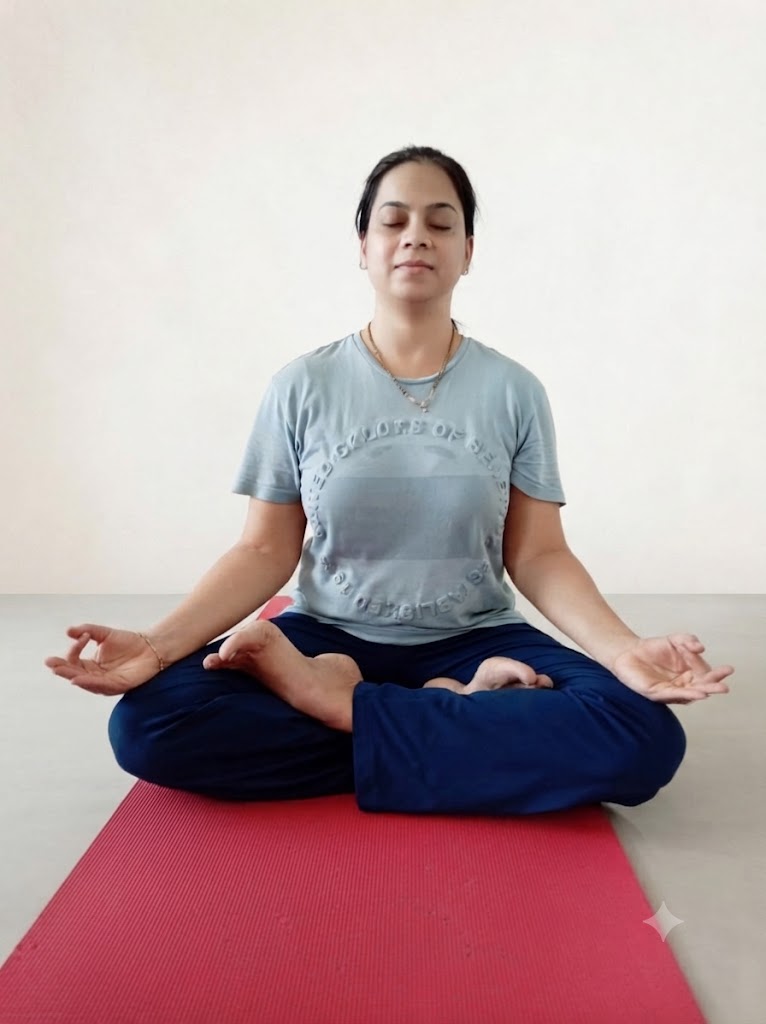
Practitioner seated in Padmasana, the lotus pose, hands resting on the knees in meditation
Padmasana
Closing the practice

Settle into stillness

Padmasana · for meditation

After the strength and balance of the nine postures above, close the session seated and still — the discipline built in the body becomes the ground for concentration and meditation.

Stillness Concentration Integration
Before you begin

Practice tips

  • Always warm up before attempting advanced poses
  • Practice under expert guidance
  • Focus on breath and balance
  • Progress gradually — do not rush
  • Maintain mental focus and awareness

Precautions

  • Avoid without proper training or supervision
  • Not suitable for people with injuries, high blood pressure, or heart conditions
  • Do not force the body into difficult postures
  • Stop immediately if pain or dizziness occurs
Note: These are advanced inversions and deep backbends. Attempt them only after building a solid intermediate practice, and ideally with a qualified instructor nearby, especially for the shoulder stand, plough, peacock, and head stand.

"Mastery of the body leads to mastery of the mind."

Practice under guidance.