Practitioner performing a yoga sequence on a shoreline at sunrise
A Beginner's Guide

The path to strength
& flexibility

After mastering the breath, the next step in yoga is the practice of asanas — stable, comfortable postures that build the body and steady the mind for what comes after.

Begin reading ↓
Introduction

Asana: a stable, comfortable seat

Asanas are not just physical exercises — they promote balance between body and mind, enhancing overall well-being. Regular practice builds strength, flexibility, and balance, preparing the body for deeper practices like pranayama and meditation.

With regular practice, asanas create harmony between body and mind, leading to lasting health and well-being. What follows is saral yoga — beginner-friendly postures, each with its steps and its benefits.

"Asana" — a stable and comfortable posture.

What Regular Practice Improves
  • 01 Flexibility and muscle strength
  • 02 Posture and body alignment
  • 03 Blood circulation and energy levels
  • 04 Stress and tension relief
  • 05 Readiness for meditation and pranayama
Beginner-Friendly Asanas

Seven poses to start with

Each posture below is grounded, simple to learn, and safe to hold for a beginner — start slow, breathe steadily, and let the shape settle into the body.

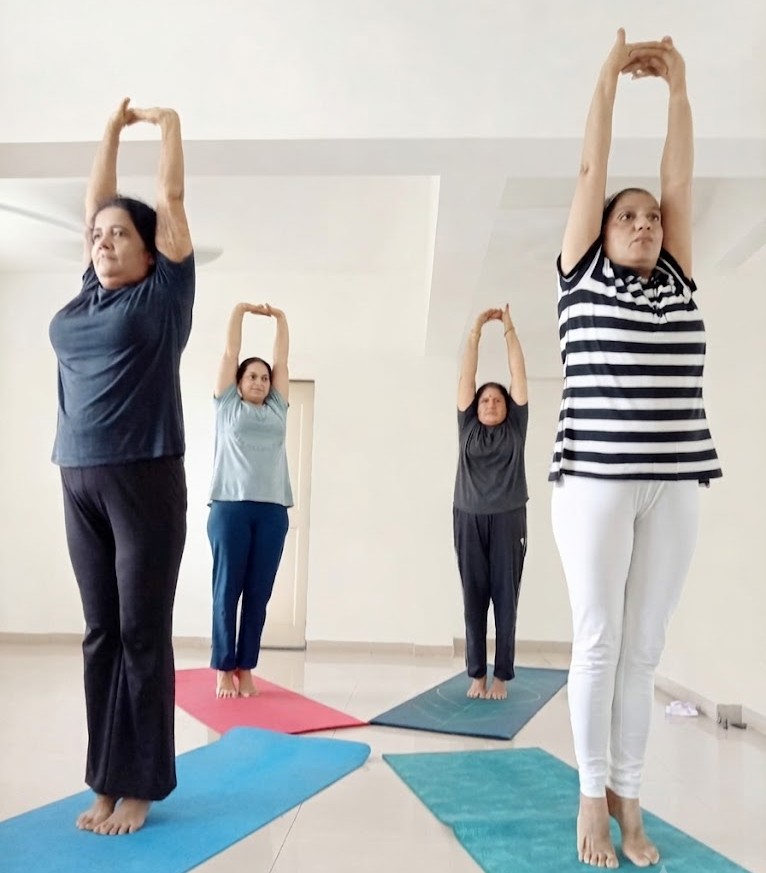
Person standing in Tadasana, Mountain Pose Standing
Tadasana

Mountain Pose

  1. Stand straight with feet together, arms by your sides.
  2. Stretch arms overhead and rise onto your toes.
  3. Hold for a few seconds, then relax.
Improves postureStrengthens legsEnhances balance
Person seated in Padmasana, Lotus Pose Seated
Padmasana

Lotus Pose

  1. Sit with legs extended, bend one leg and rest that foot on the opposite thigh.
  2. Bend the other leg and place its foot on the opposite thigh.
  3. Rest hands on knees in a mudra, palms facing up.
  4. Keep the back straight, relax the shoulders.
  5. Close your eyes and breathe slowly.
Improves postureCalms the mindEnhances concentrationIncreases hip & knee flexibility
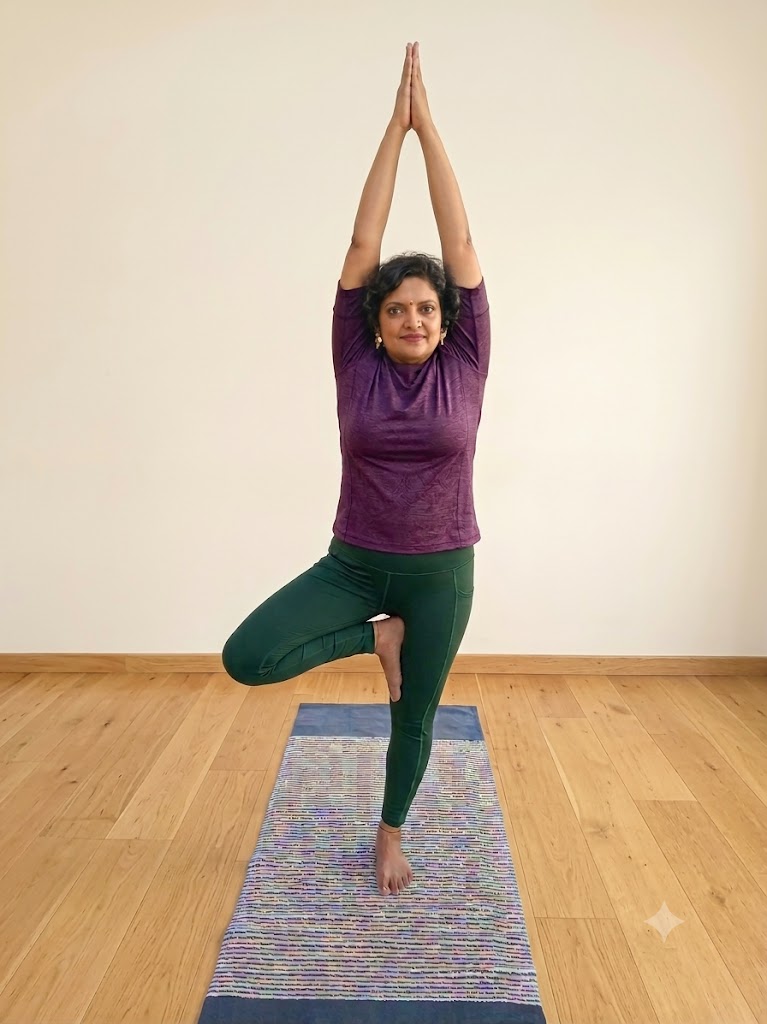
Person balancing in Vrikshasana, Tree Pose Balancing
Vrikshasana

Tree Pose

  1. Stand straight and place one foot on the inner thigh of the other leg.
  2. Bring hands together in prayer position.
  3. Hold and maintain your balance.
Improves focusStrengthens legsEnhances stability
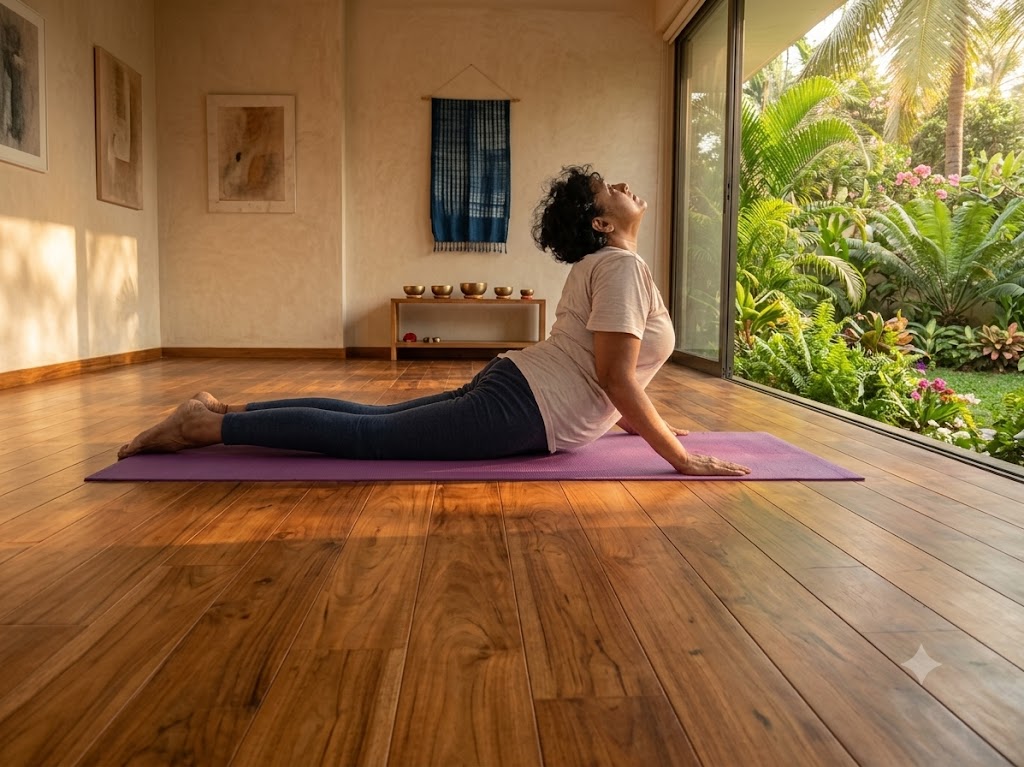
Person in Bhujangasana, Cobra Pose Backbend
Bhujangasana

Cobra Pose

  1. Lie on your stomach and place palms under your shoulders.
  2. Inhale and lift your chest upward.
  3. Keep elbows slightly bent; hold for 30 seconds.
Strengthens spineImproves flexibilityRelieves back stiffness
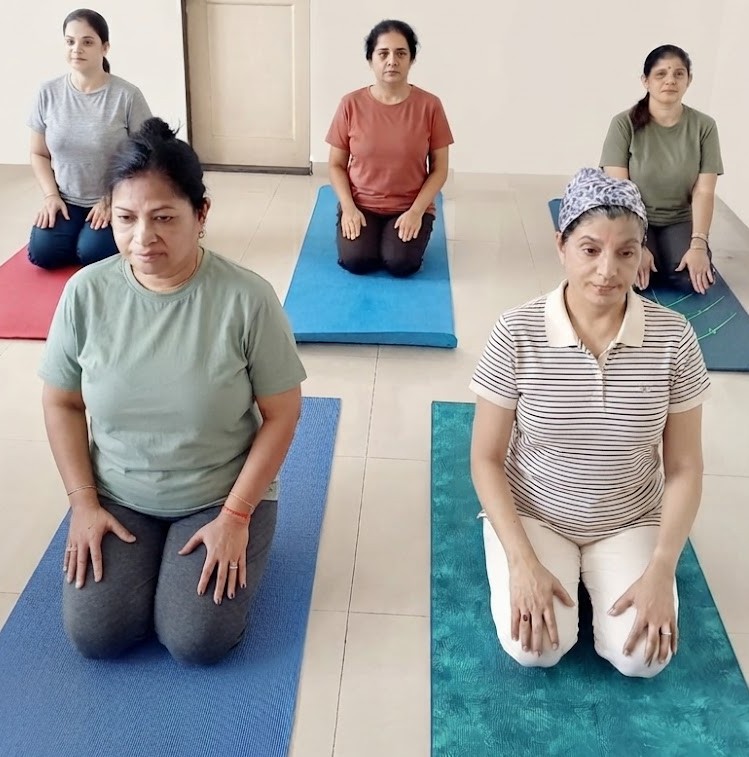
Person seated in Vajrasana, Thunderbolt Pose Kneeling
Vajrasana

Thunderbolt Pose

  1. Sit on your heels, keep your back straight, hands on knees.
  2. Breathe normally and hold the posture for 30 seconds.
Improves digestionCalms the mindSafe after meals
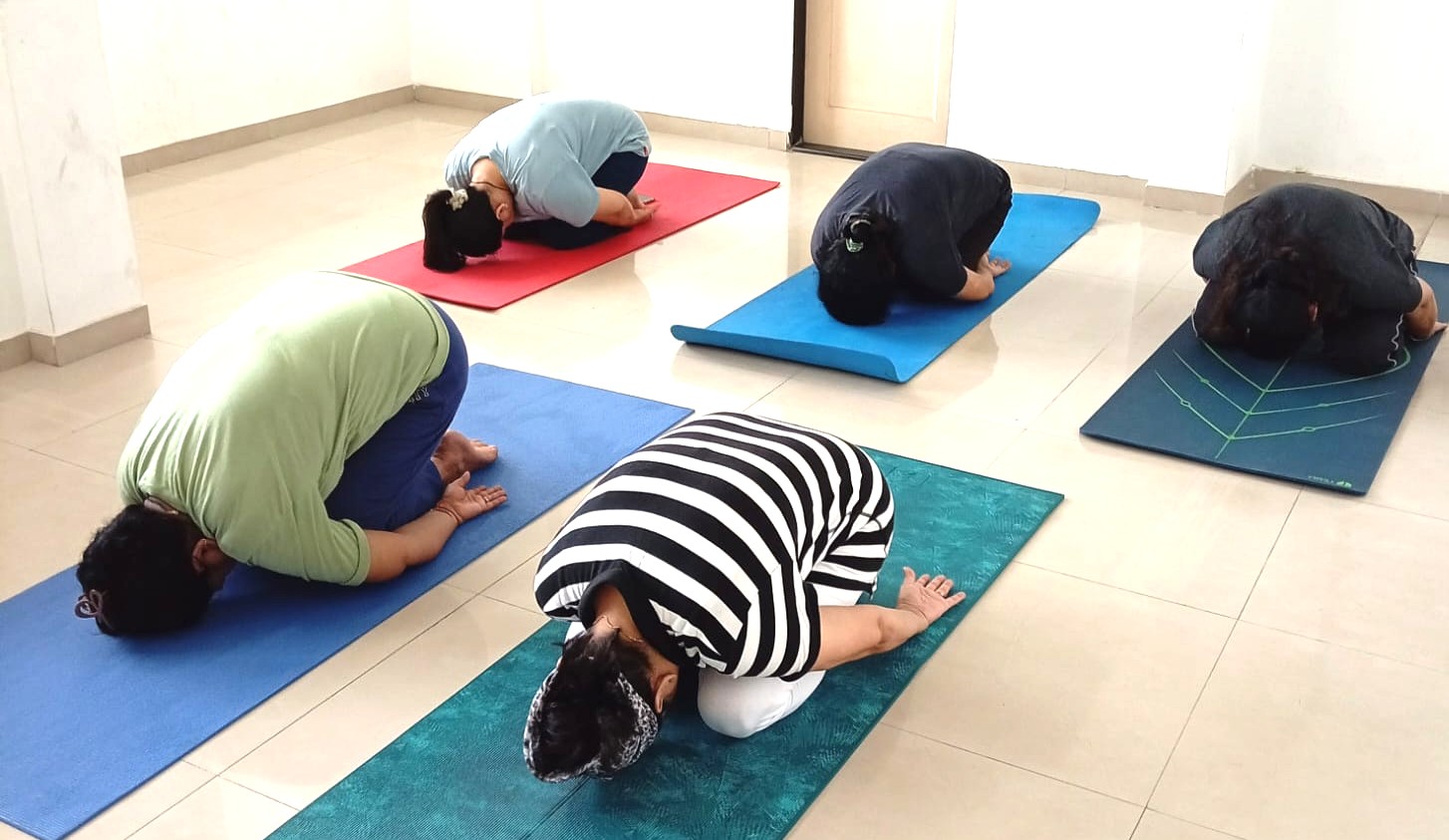
Person resting in Balasana, Child's Pose Resting
Balasana

Child's Pose

  1. Kneel and sit back on your heels.
  2. Bend forward, resting your forehead on the floor.
  3. Stretch arms forward or rest them beside the body.
Relieves stressGently stretches backPromotes relaxation
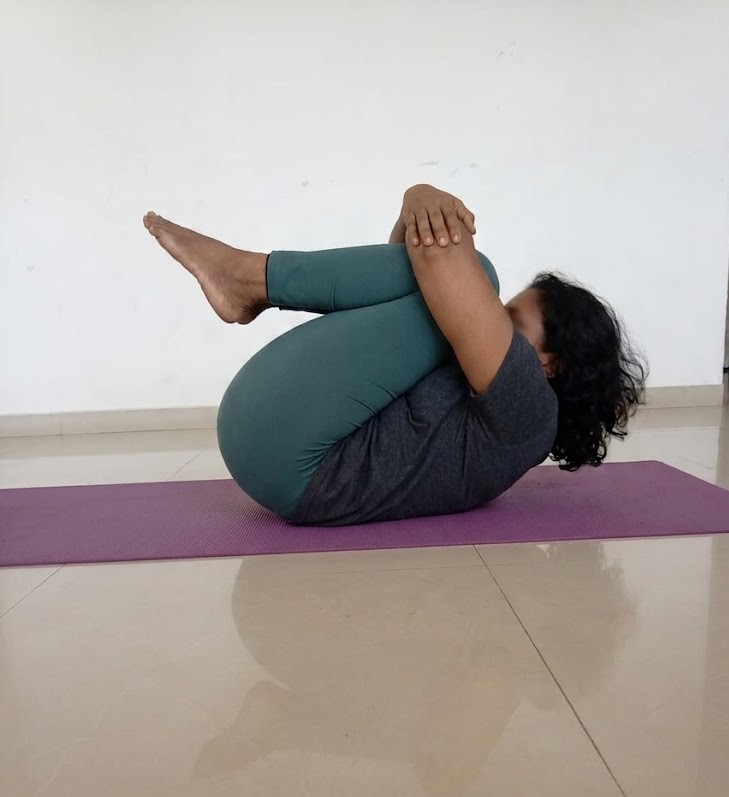
Person in Pavanamuktasana, Wind-Relieving Pose Supine
Pavanamuktasana

Wind-Relieving Pose

  1. Lie on your back and bring the right knee to your chest.
  2. Hug the knee and lift your head towards it. Hold and breathe.
  3. Release, then repeat with the left knee.
  4. Bring both knees to the chest and repeat once more.
Aids digestionReduces bloatingStrengthens abdomen
A Flowing Sequence

Suryanamaskara — Sun Salutations

Not a single asana but twelve postures flowing together with the breath — inhale as the body opens, exhale as it folds. Practiced in pairs, leading once with the right leg and once with the left, so the count stays even: 2, 4, 6, 12.
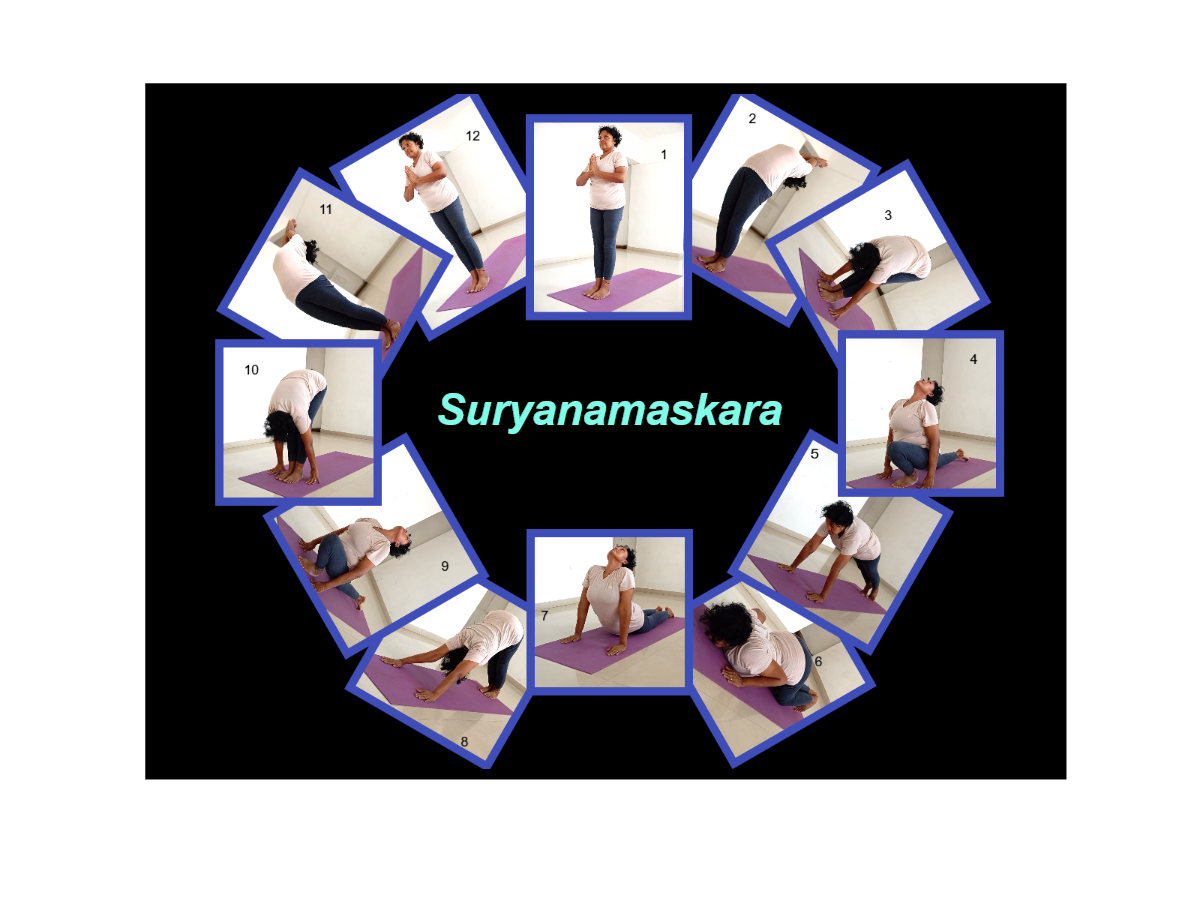
Sculpture depicting the twelve Surya Namaskara postures
The twelve postures of Surya Namaskara, cast in sequence.

Each round moves through the same twelve shapes, coordinated breath by breath. Beginners can start with two to four rounds and build up gradually as comfort and fitness allow.

Move slowly at first — the sequence rewards patience far more than speed.

01

Pranamasana

Exhale, stand upright, palms together at the chest.

02

Hasta Uttanasana

Inhale, raise both arms overhead, bend gently backward.

03

Padahastasana

Exhale, fold forward, bring hands beside the feet.

04

Ashwa Sanchalanasana

Inhale, step the right leg back, bend the front knee, look forward.

05

Dandasana

Hold the breath, step the other leg back, body in a straight plank.

06

Ashtanga Namaskara

Exhale, lower down — chest, chin, palms, knees and toes touching, hips raised.

07

Bhujangasana

Inhale, slide forward and lift the chest, lower body grounded.

08

Parvatasana

Exhale, lift the hips into an inverted V shape.

09

Ashwa Sanchalanasana

Inhale, bring the left foot forward between the hands, look ahead.

10

Padahastasana

Exhale, bring the other foot forward and fold toward the feet.

11

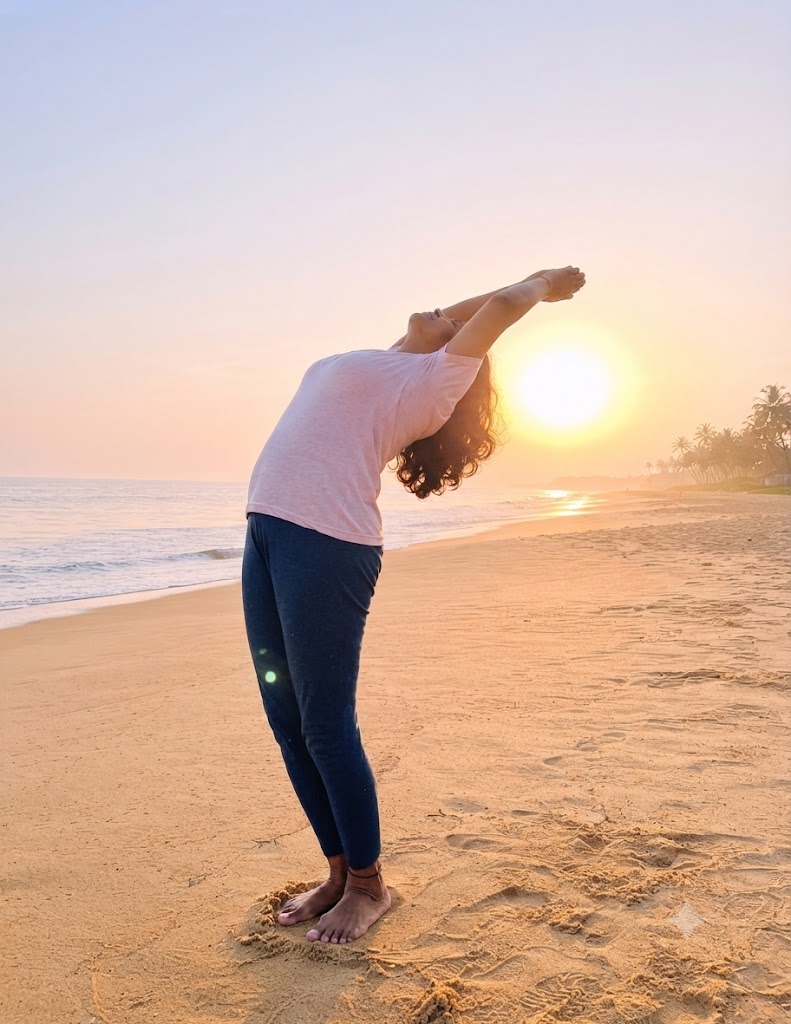
Hasta Uttanasana

Inhale, rise up, stretch the arms overhead, bend gently backward.

12

Pranamasana

Exhale, return to standing, palms together at the chest.

What it builds

  • Flexibility, mobility, and coordination
  • Strength through the legs, arms, back, and core
  • Better posture and body awareness
  • Improved breathing and circulation
  • A gentle, full-body workout with room to relax into afterward

Beginner tips

  • Start with 2–4 rounds; increase gradually with comfort
  • Match one movement to one breath — don't rush the count
  • Practice in even numbers so both sides stay balanced
Suryanamaskara is a sequence, not a single asana — but its twelve postures share the breath-led rhythm that runs through every practice above.
Before You Begin

Practice tips for beginners

  • Practice on an empty stomach.
  • Maintain steady breathing throughout.
  • Start with simple poses; avoid strain and progress gradually.
  • Practice regularly, for about 15–30 minutes, for the best results.
"Stretch your body, steady your breath, and discover the strength and calm within."
A Beginner's Guide ·

"Mastery of the body leads to mastery of the mind."

Practice under guidance.