Introduction

Relaxation & Meditation

While physical yoga strengthens the body, relaxation and meditation are essential complements — promoting mental balance, emotional stability, and stress relief, and preparing the mind for concentration and inner awareness.

4Techniques in this chapter
Any levelWho it's for
5–20 minTypical session
In · hold · out, at your own pace
Why practice these

Where the body's practice becomes the mind's.

Relaxation and meditation help release tension, rejuvenate the nervous system, restore energy, and deepen the benefits of your yoga routine.

Regular practice helps you experience a peaceful mind and focused attention — making your yoga journey complete.

01
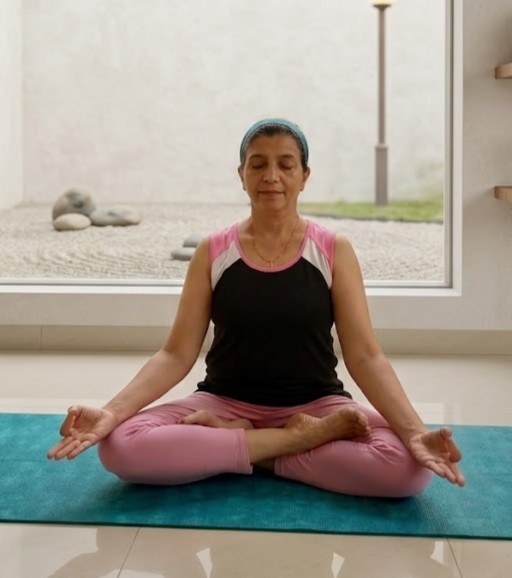
Person seated cross-legged with eyes closed, observing the breath in quiet meditation
Technique 01 of 04

Mindful Observation of Breath

Anapanasati

A classical meditation practice that develops awareness, concentration, and insight through simple observation of the natural breath.

  1. Sit comfortably in a stable posture — cross-legged on the floor or on a chair with feet grounded. Spine upright, shoulders relaxed, hands resting on knees or lap
  2. Gently close your eyes and allow your body to settle with a few natural breaths
  3. Bring attention to your breath. Observe the natural flow of inhalation and exhalation without controlling it
  4. Focus on a specific point — the sensation of air at the nostrils, or the rise and fall of the abdomen
  5. Notice the details of each breath: length, temperature, subtle movement
  6. If your mind wanders, gently bring it back without frustration — this returning is part of the practice
  7. Optionally, mentally note "in" while inhaling and "out" while exhaling
  8. Continue 5–10 minutes initially, extending to 15–20 minutes or longer with practice
  9. To conclude, deepen your breath slightly, bring awareness back to the body, and slowly open your eyes
Concentration Mindfulness Self-awareness
02
Practitioner gazing steadily at a candle flame during Trataka meditation
Photo: Trataka Meditation
Technique 02 of 04

Candle Gazing Meditation

Trataka

A traditional yogic concentration practice that helps steady the mind, improve focus, and relax the eyes.

  1. Sit comfortably in a stable posture, spine upright, head-neck-back aligned
  2. Place a lit candle at eye level, roughly 2–3 feet away, in a dim, draft-free room
  3. Gently gaze at the tip of the flame. Keep eyes steady and relaxed; avoid blinking, starting with about 1 minute
  4. If your eyes water, that's natural — briefly close them if it becomes uncomfortable
  5. After gazing, close your eyes and visualize the flame at the space between your eyebrows, holding the image as long as possible
  6. When the image fades, open your eyes and repeat
  7. Gradually increase gazing and visualization time — from 1 minute up to 3–5 minutes or more
Mental clarity Reduces restlessness Eye focus Prepares for deep meditation
03
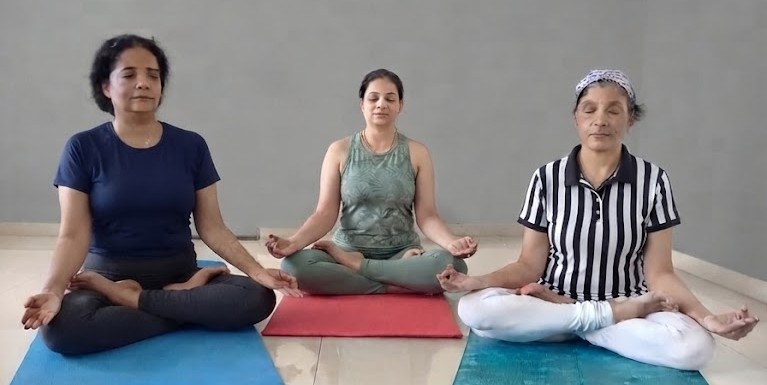
Group sitting in stillness during a deep meditation session
Photo: Meditation
Technique 03 of 04

Deep Meditation

Dhyan

The stage of sustained, effortless awareness in yogic practice, where the mind becomes calm, focused, and deeply absorbed.

  1. Sit in a stable, upright posture — Padmasana or Sukhasana — spine upright, shoulders relaxed
  2. Close your eyes, settle the body, and take a few slow, deep breaths to release initial tension
  3. Bring attention to your natural breath, simply noticing its rhythm without controlling it
  4. As thoughts arise, observe them without reacting — let them pass like clouds, and return to the breath
  5. Allow awareness to become steadier and more continuous, without effort or strain
  6. You may shift from focusing on the breath to simply resting in calm, open presence
  7. Optionally focus on a mantra, breath, or visualization as your point of concentration
  8. Begin with 10 minutes, gradually increasing to 30 minutes with regular practice
  9. To finish, deepen your breath, gently move fingers and toes, and open your eyes without rushing
Reduces stress & anxiety Emotional balance Inner calm Mental well-being
04
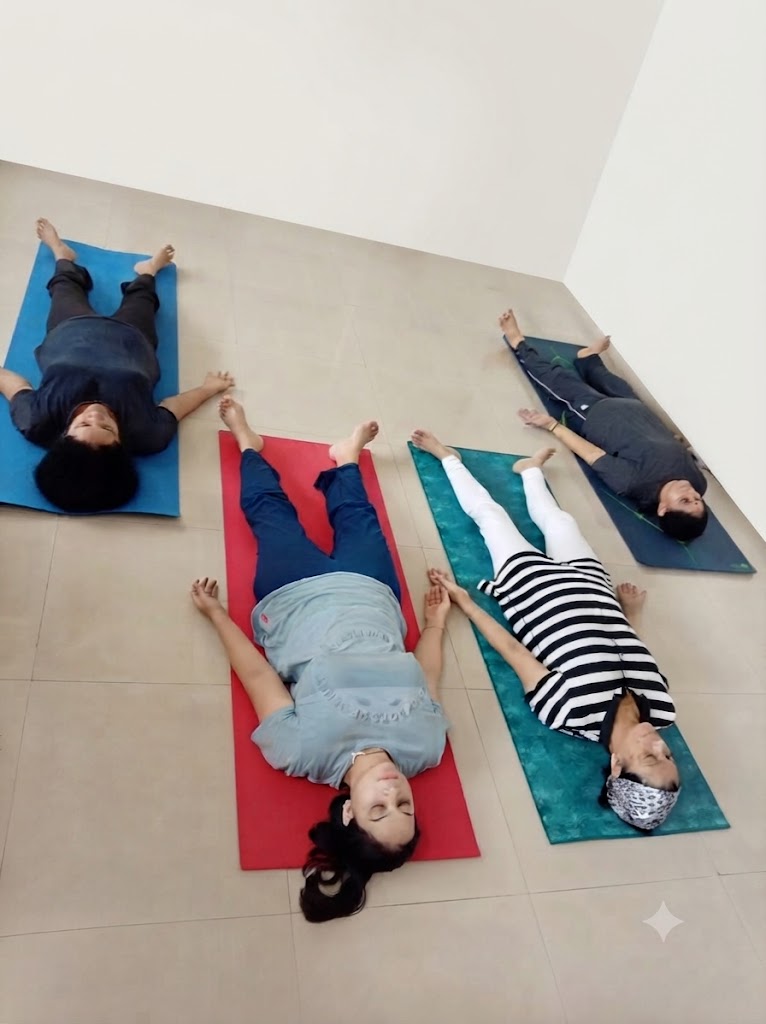
Practitioner lying flat on the back in Shavasana, arms and legs relaxed, in complete stillness
Photo: Shavasana Meditation
Technique 04 of 04

Corpse Pose · Deep Relaxation

Shavasana

The ultimate relaxation posture in yoga — a guided rest practice usually done at the end of a session to integrate all the benefits of your practice.

  1. Lie flat on your back on a comfortable surface, legs slightly apart, feet falling outward naturally
  2. Arms a little away from the body, palms facing upward, fingers gently curled
  3. Close your eyes and take a few slow, deep breaths. With each exhale, sink deeper into the ground
  4. Bring attention through the body from toes upward — feet, legs, hips, abdomen, chest, back, arms, shoulders, neck, face, head
  5. Consciously relax each area: soften the jaw, drop the shoulders, smooth the forehead
  6. Let your breath return to its natural rhythm — simply observe it
  7. Let go of effort. If thoughts arise, let them pass; return awareness to the feeling of relaxation
  8. Feel a sense of heaviness and stillness, as if fully supported by the ground
  9. Remain for 5–10 minutes or longer
  10. To come out: deepen your breath, move fingers and toes, rotate wrists and ankles, stretch if needed, turn onto your right side, rest briefly, then slowly sit up
Relieves stress & tension Calms nervous system Mental clarity Releases muscle tension Body awareness
Before you begin

Tips for effective relaxation and meditation

"A peaceful mind is born from stillness. Meditate. Relax. Find peace."

Practice in a quiet, comfortable space.
Practice under guidance.